
Original tests · 6 submissions / 6 successes · 2026-11-11
H3 Sci-Fi Test: 1:1 vs 9:16 vs 16:9
One sci-fi prompt, two images per format. Compare the framing of orbital rings, giant planets, futuristic cities and an astronaut, with every original and timing available.
Editorial pick · best of 2 in this preset · 1:1
Square sci-fi scene
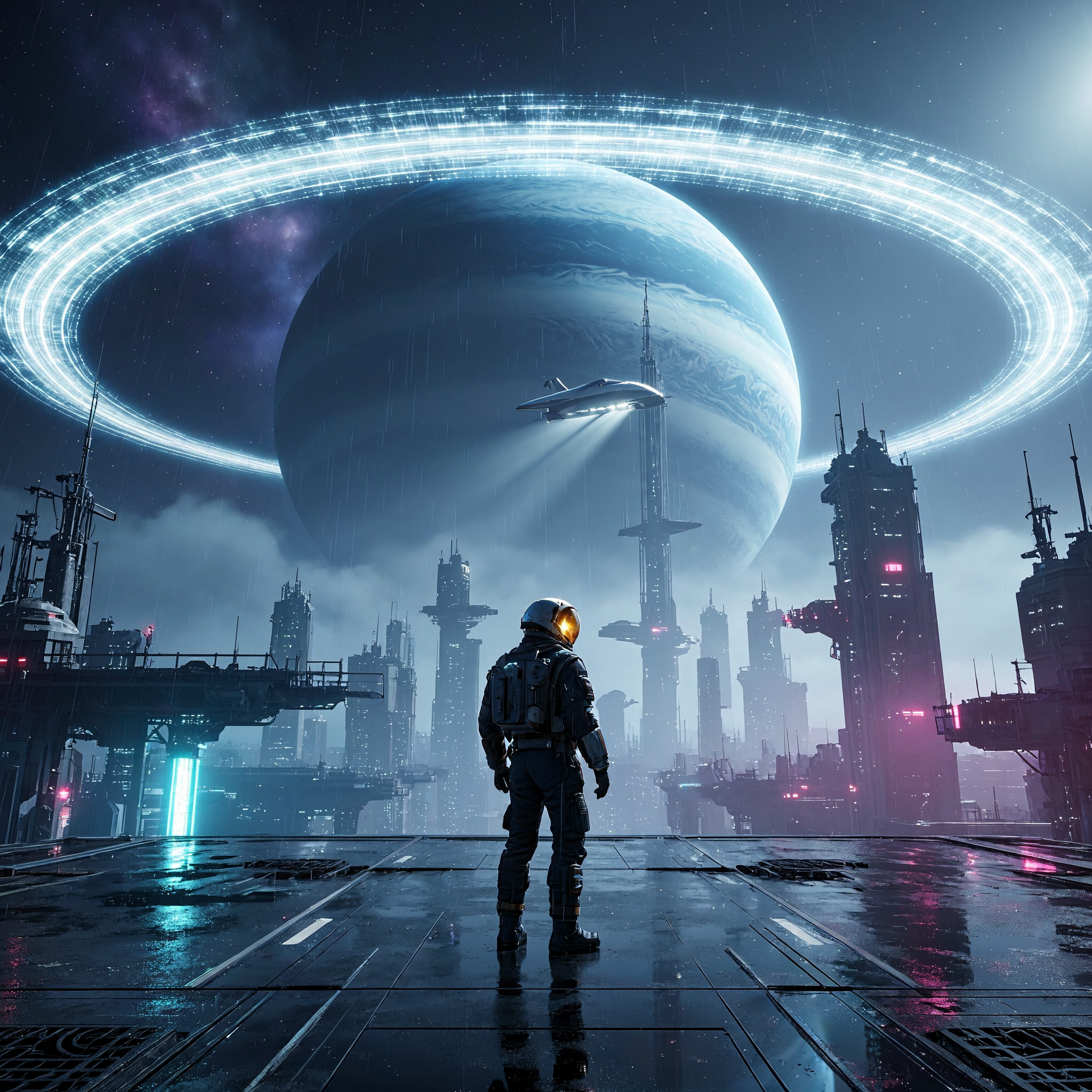
Our square pick: the complete astronaut, bright orbital ring, blue planet and layered city fit into one clear composition. Wet-deck reflections carry cyan and magenta light into the foreground. The very bright ring loses some fine detail.
2048 × 2048 · Seed 20261121
Download original PNG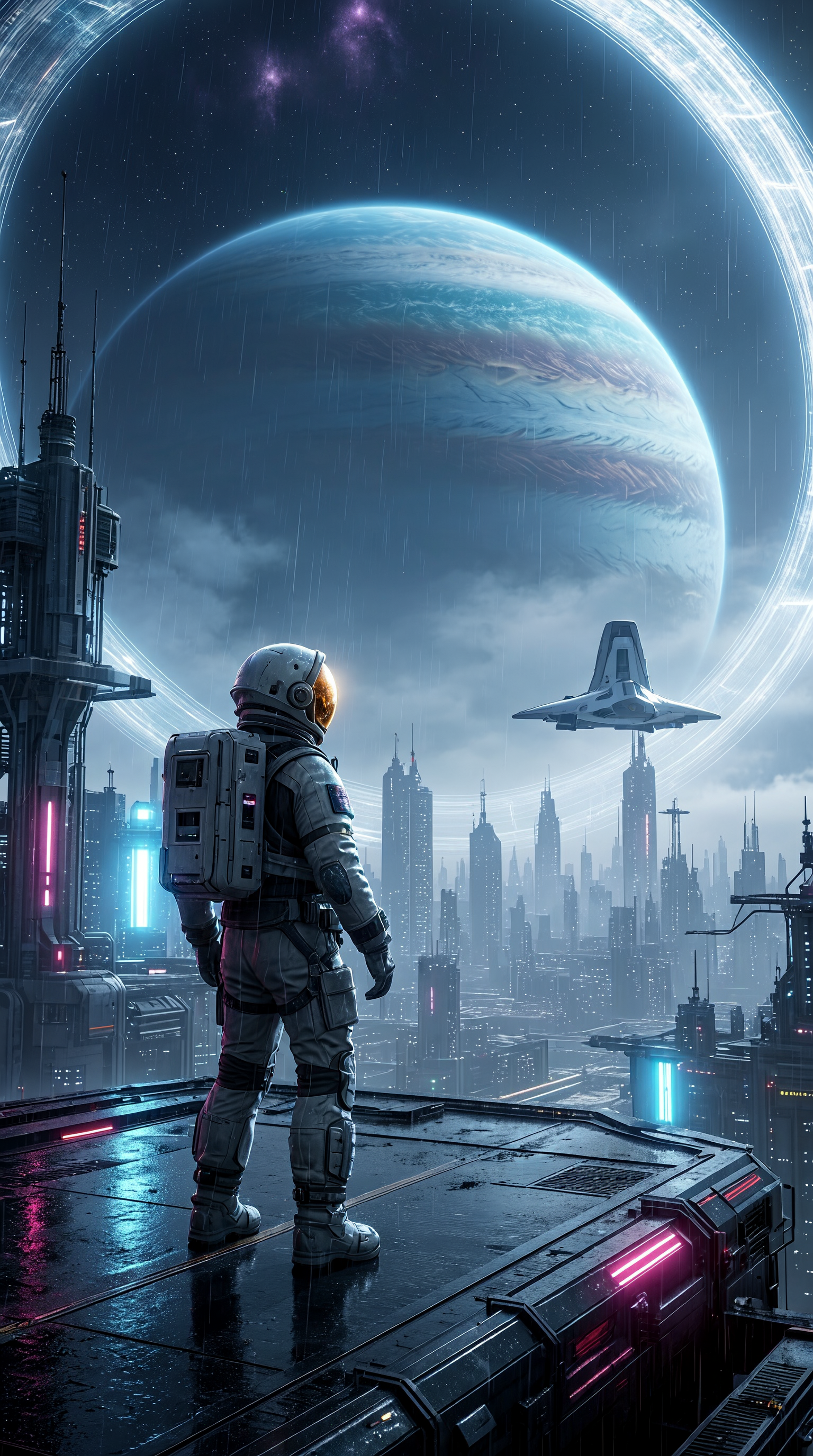
Editorial pick · best of 2 in this preset · 9:16
Portrait sci-fi poster
Our portrait pick: the tall ring arc and towering city emphasize vertical scale. Helmet and boots remain visible, with a distinct shuttle silhouette at right. The ring intentionally runs beyond the top edge; there is little quiet space for a large title.
1536 × 2752 · Seed 20261121
Download original PNG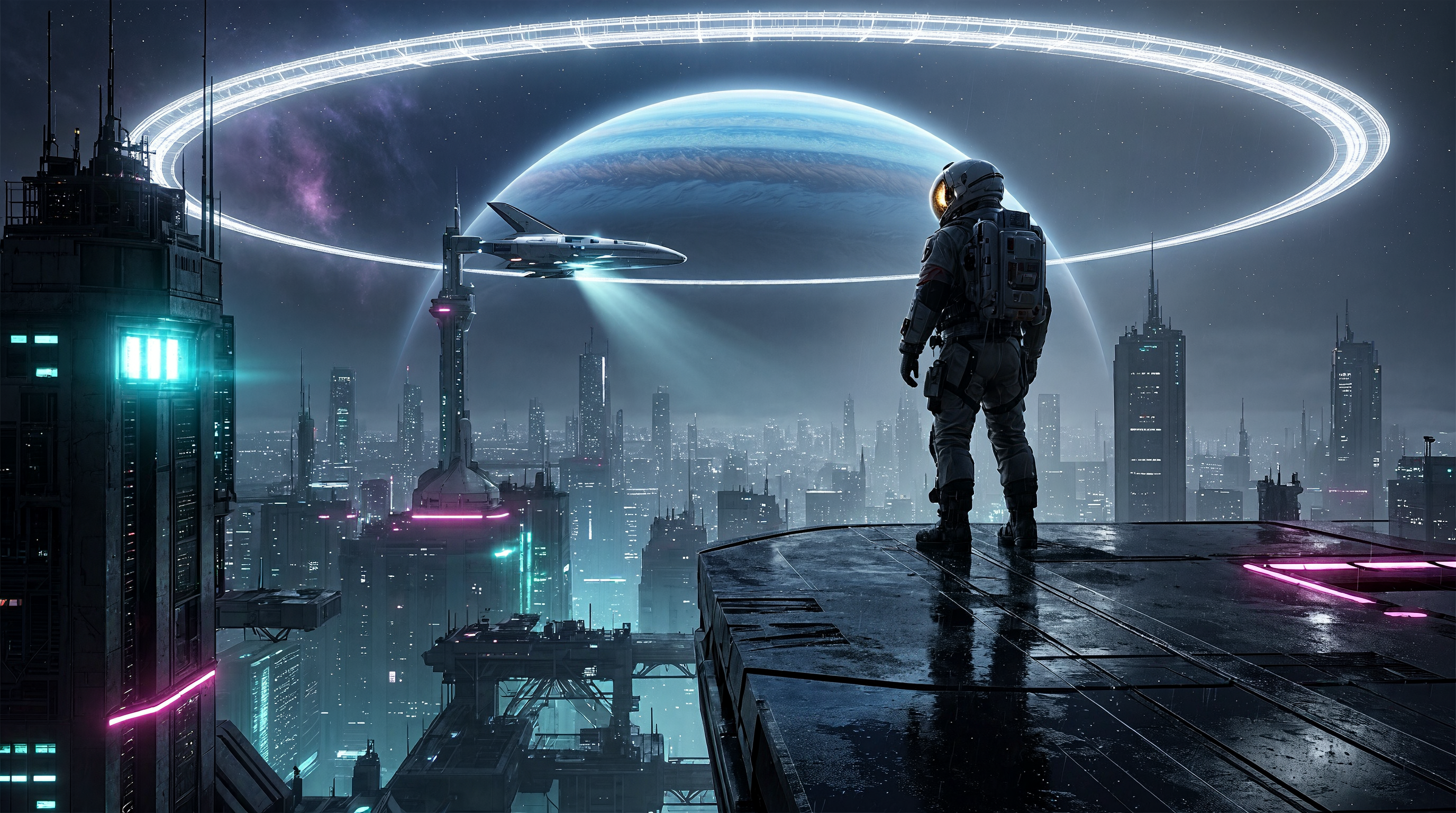
Editorial pick · best of 2 in this preset · 16:9
Our overall sci-fi pick
Our overall pick in this six-image set: the full astronaut anchors the right foreground, an expansive ring frames the planet, and layered platforms create strong depth. Cyan and magenta lighting is restrained. The shuttle overlaps a tower, making its hovering clearance ambiguous.
2752 × 1536 · Seed 20261122
Download original PNG| Ratio preset | Seed | Actual pixels | Server execution | Observed wait | Reused nodes |
|---|---|---|---|---|---|
| 1:1 ★ | 20261121 | 2048 × 2048 | 8.72 s | 14.21 s | Model loaders |
| 1:1 | 20261122 | 2048 × 2048 | 3.80 s | 8.09 s | Loaders + conditioning |
| 9:16 ★ | 20261121 | 1536 × 2752 | 8.56 s | 14.44 s | Model loaders |
| 9:16 | 20261122 | 1536 × 2752 | 3.82 s | 7.53 s | Loaders + conditioning |
| 16:9 | 20261121 | 2752 × 1536 | 8.53 s | 13.89 s | Model loaders |
| 16:9 ★ | 20261122 | 2752 × 1536 | 3.80 s | 7.73 s | Loaders + conditioning |
How we tested MiniMax H3 Image
We directly ran our production Comfy H3 T2I graph: one unchanged English sci-fi prompt × three presets × seeds 20261121 and 20261122. Six sequential tasks on one RTX 5090 D v2 all produced PNGs. No reference or prompt enhancer was used. These are our own generations. The scene is fictional science-fiction art, not a physics or aerospace simulation.
Server execution is Comfy execution_start → execution_success, including noncached graph work: 3.80–8.72 s in this set. Observed wait is client submission → first completed history poll: 7.53–14.44 s, including polling/network latency but excluding download. All tasks reused model loaders; the second image per format also reused conditioning. This is not a cold-start test or a fair ranking of aspect-ratio speed. Server/client clocks differ, so no separate queue duration is inferred.
1:1 produced 2048 × 2048. The nominal 9:16 and 16:9 presets produced 1536 × 2752 and 2752 × 1536: model-aligned dimensions, approximately those ratios (about 0.8% narrower/wider). Images below retain their complete frames; the display copies are resized/compressed WebP, and the downloadable PNG files are untouched.
We reviewed helmet/boot completeness, astronaut and shuttle silhouettes, planet/ring framing, city depth, metal and wet-deck reflections. We selected one of two images per preset and publish every alternative with visible shortcomings. This is a small editorial comparison of one sci-fi prompt, not a numeric quality score, an identity/Edit benchmark, or a comparison with other models.
NVIDIA GeForce RTX 5090 D v2 · 6 steps · CFG 1 · euler / simple
The exact sci-fi prompt used in all six runs
The test seeds and graph are downloadable below. The public generator currently offers the ratio presets; fixed-seed test control was applied through our test script, not a promised seed field in the website UI.
A cinematic hard science fiction film still: one lone astronaut seen from behind, full body including helmet and boots, standing on a rain-soaked obsidian landing deck above a vast futuristic megacity. Exactly one sleek exploration shuttle hovers beside a distant docking tower. An enormous luminous orbital ring arcs across the sky, framing a colossal blue gas giant with visible cloud bands. Dense layered architecture, intricate antenna arrays and industrial docking structures recede into atmospheric haze. Electric cyan reactor light and restrained magenta neon reflect in the wet black deck, warm amber light inside the astronaut visor, dramatic volumetric beams through thin mist, tiny stars and a subtle violet nebula, epic scale, believable metal and glass materials, exceptionally detailed environment, strong visual depth, clear astronaut silhouette, carefully balanced composition, photorealistic cinematic lighting. No text, no lettering, no logos, no watermark, no collage.
Inspect every generated image, including the three alternatives
1:1 · Seed 20261121 ★
Our square pick: the complete astronaut, bright orbital ring, blue planet and layered city fit into one clear composition. Wet-deck reflections carry cyan and magenta light into the foreground. The very bright ring loses some fine detail.
Download original PNG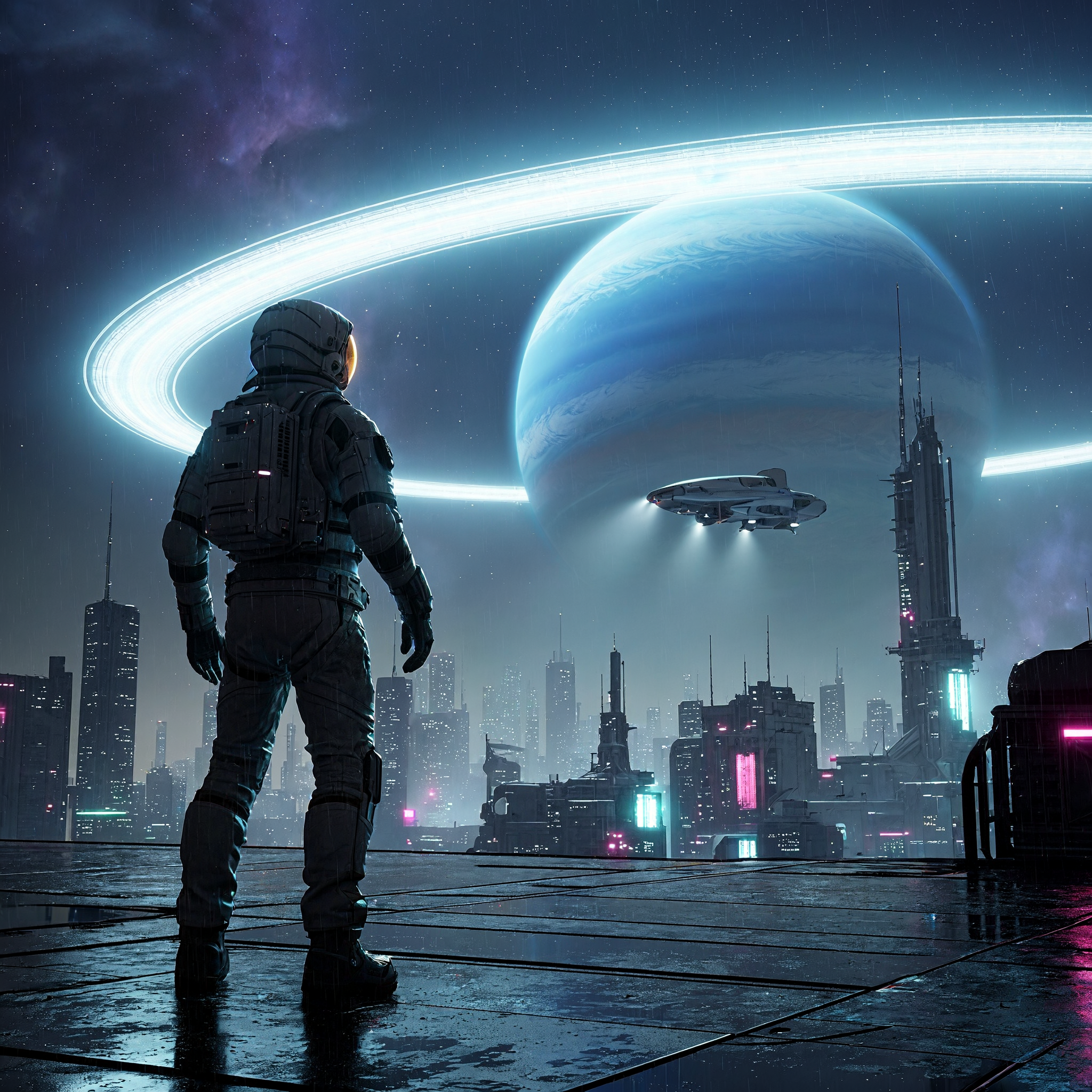
1:1 · Seed 20261122
The larger astronaut makes the suit and backpack easier to inspect. The ring extends beyond the right edge and the foreground figure occupies more of the scene; we preferred the first square image for its environment and scale.
Download original PNG9:16 · Seed 20261121 ★
Our portrait pick: the tall ring arc and towering city emphasize vertical scale. Helmet and boots remain visible, with a distinct shuttle silhouette at right. The ring intentionally runs beyond the top edge; there is little quiet space for a large title.
Download original PNG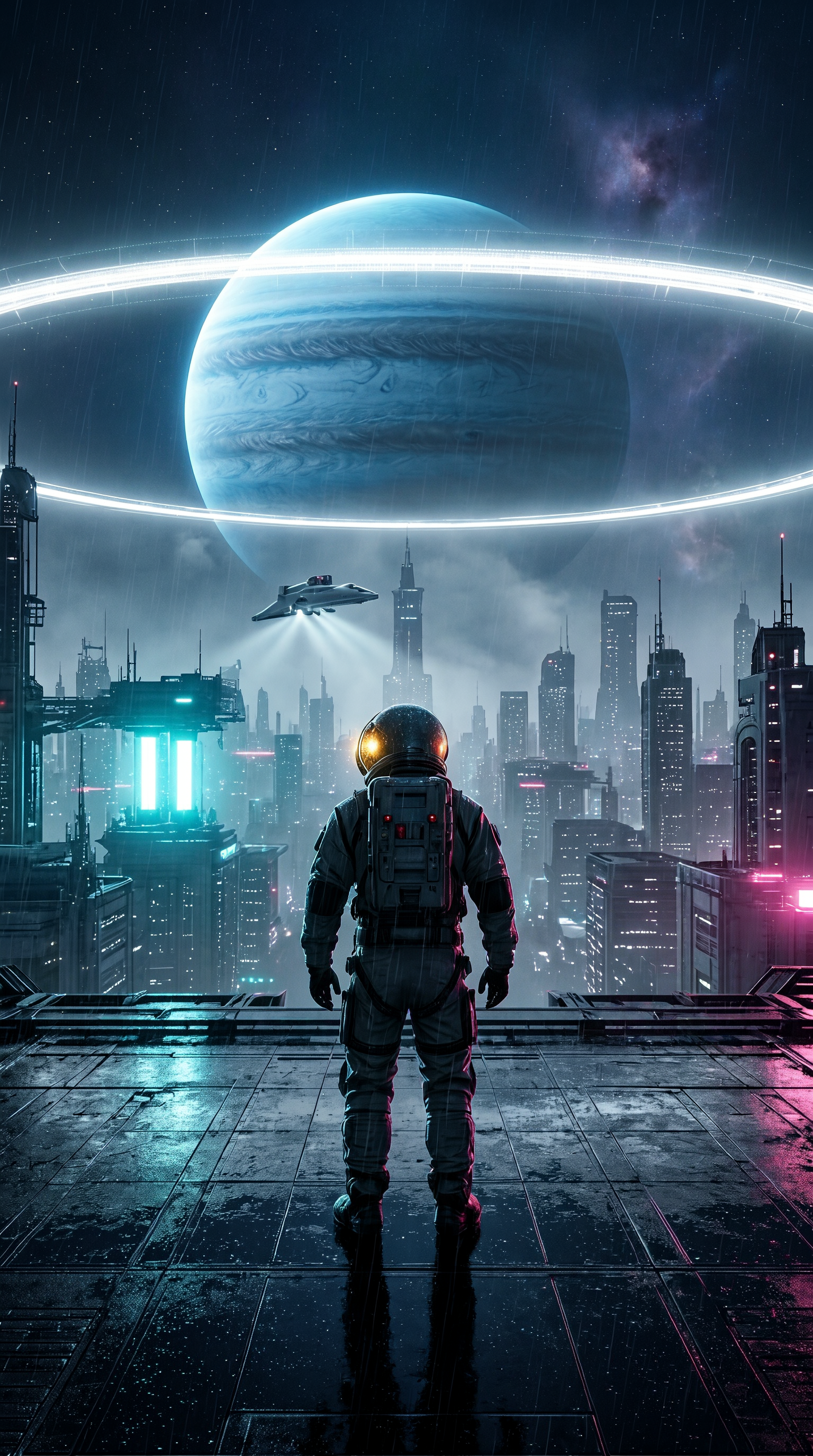
9:16 · Seed 20261122
A centered astronaut and horizontal ring give this image a more symmetrical layout. The neon reflections are strong, but the skyline feels less deep than the portrait pick. A bright visor is visible despite the requested rear view.
Download original PNG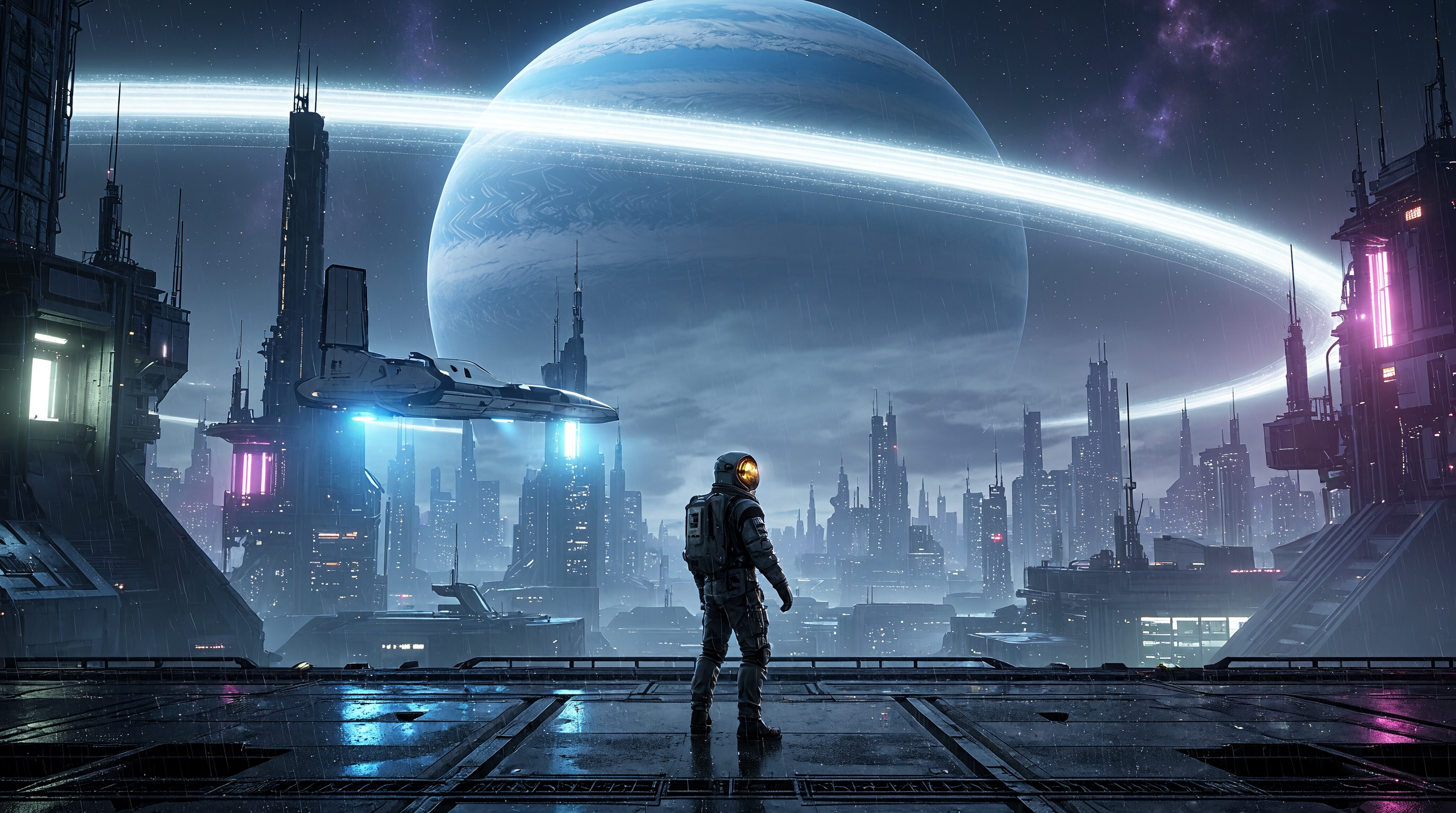
16:9 · Seed 20261121
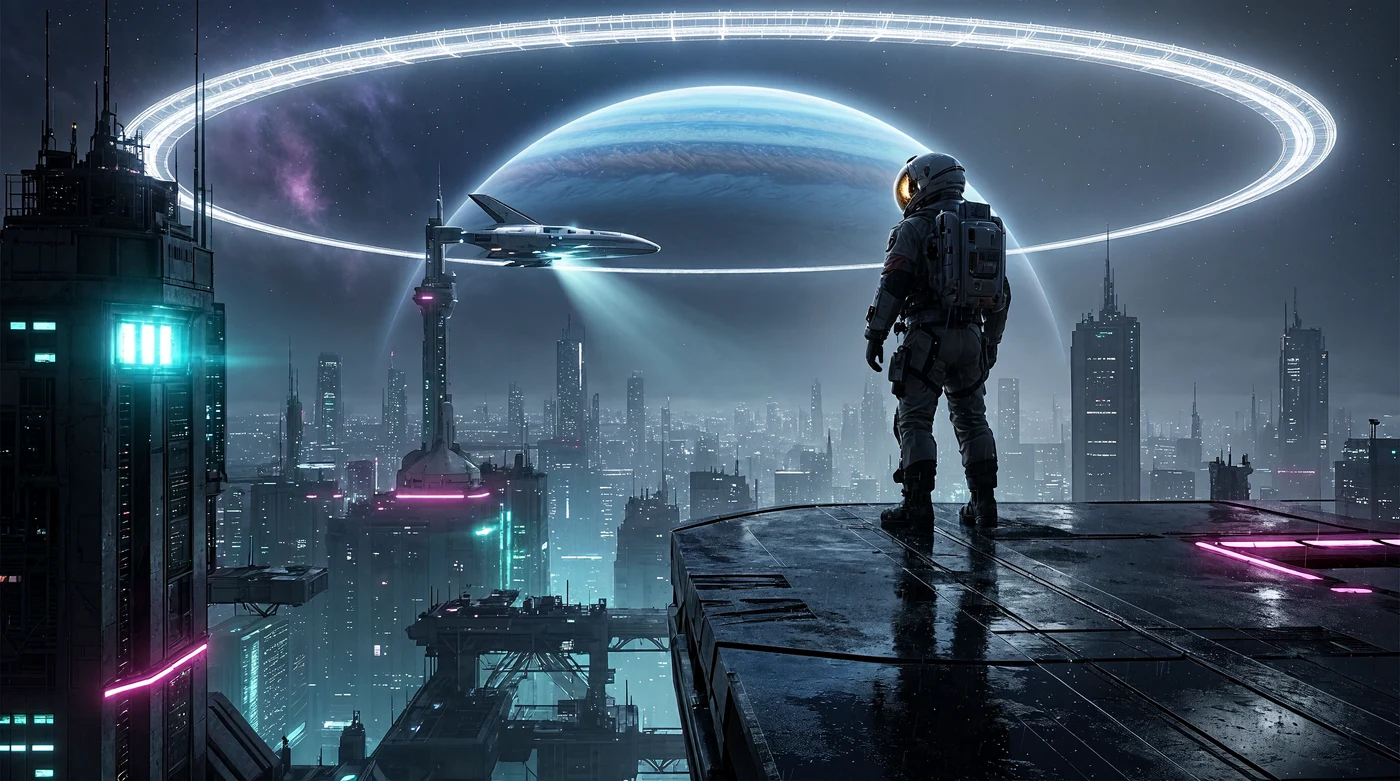
The broad skyline and foreground reflections convey a large environment. The astronaut is smaller and the planet is cut by the top edge; an additional parked craft appears on a lower platform. We preferred the second landscape for its clearer foreground subject.
Download original PNG16:9 · Seed 20261122 ★
Our overall pick in this six-image set: the full astronaut anchors the right foreground, an expansive ring frames the planet, and layered platforms create strong depth. Cyan and magenta lighting is restrained. The shuttle overlaps a tower, making its hovering clearance ambiguous.
Download original PNGQuick answer & verified facts
What Can You Do with H3 Image Here?
Use text to create a new image, or provide one image and describe an edit. Official model capabilities and this website’s supported settings are listed separately below.
What is H3 Image?
MiniMax H3 Image is a MiniMax image-generation and editing model. This website provides an independent browser interface through Comfy, rather than the official MiniMax API.
Text-to-image
Select Text to Image, choose Comfy · MiniMax H3, then MiniMax H3 Image T2I · INT8 NVFP4. Describe a new image without uploading a reference.
Image editing
Select Image to Image and MiniMax H3 Image Edit · INT8 NVFP4. Upload exactly one reference image and describe the changes. This integration currently accepts one reference, not the full model’s multiple-reference capability.
Real generations on November 11, 2026
This page publishes six real text-to-image outputs across square, portrait and landscape. A separate 2048 × 2048 single-image edit also succeeded. The comparison here measures T2I only; editing is not included in its timings.
Current site settings
The integration uses six sampling steps, CFG 1, and quantized INT8 / NVFP4 components. Square text-to-image starts at 2048 × 2048. Editing scales the reference to about 4 MP while retaining its aspect ratio.
Resolution is not the same as the official model ceiling
The original model card describes higher-resolution configurations. This site’s current defaults and tests are around 4 MP; it does not promise every official resolution, sixteen references, or an exact identity-preserving edit.
How to Use MiniMax H3 Image Online
Use the existing image workspace; select the model explicitly rather than the separate face swap mode.
Choose generation or editing
Open the image generator and sign in. For a new scene, choose Text to Image; for an existing picture, choose Image to Image. Then select Comfy and the matching H3 model.
Prepare your instruction and input
For T2I, describe the subject, composition, lighting, and style, then choose an available aspect ratio. For Edit, upload one JPG, PNG, or WebP no larger than 10 MB and state what to change and what to retain.
Check credits and submit
The current image workflow charges 2 credits for text-to-image and 4 for image-to-image. Check the live cost before submitting. Submit once and monitor the task rather than creating duplicate jobs while queued.
Review before downloading
Inspect the generated image, including requested text, faces, edges, and details you intended to retain. Download when the result is suitable. An edit can alter details outside the requested change, so compare it with the reference.
H3 Sci-Fi Prompt Ideas
The complete measured prompt is published above. The editing and cover instructions below are additional ideas and were not part of the six measured runs.
Orbital city · measured scene
Use a giant blue planet, luminous orbital ring, futuristic city and a full astronaut, with rain-soaked metal, cyan/magenta light, mist and volumetric beams. Copy the full English prompt above to reference the measured scene.
Neon lighting · editing idea
Upload a sci-fi image you have permission to edit. Try: change city neon to cyan and magenta, strengthen wet-deck reflections, keep the astronaut and planet positions. Editing can alter other details; inspect the output.
Space cover · portrait composition
Describe a full astronaut on an alien base beneath a giant planet and orbital ring. Explicitly request a quiet title area at the top and no generated text. Compare the output with the limited title space in our portrait pick.
Sources, Verification & Licensing
Publisher: charliekirkface.net editorial team. Updated November 11, 2026. Model-level claims refer to MiniMax’s model card; quantized file names refer to Comfy-Org. Site-specific statements come from our current integration and successful test tasks. Consult the official license for authorization requirements.
MiniMax H3 Image FAQ
Mode choice, output size, references, credits, and responsible use.
Try H3 Image on charliekirkface.net
Choose T2I for a new scene or Edit for one reference image. Check the current cost, submit your instruction, and review the image before downloading.